(category)General
Adaptive Momentum, Rebuilt.Adaptive Momentum, Rebuilt.
Read on to know how Capitalmind Wealth’s Adaptive Momentum strategy works, how its momentum factor is constructed, and the changes made to the model over time.
Aaryan Sanghavi•

In quantitative investing, constructing a “factor” is a series of deliberate steps that one must take in order to arrive at their own economically sound and statistically backed animal. Each choice that you make is a different interpretation of your hypothesis, and that is what gets baked into the model. There are a large number of choices to be made, and these compound at every step, and this is how one ends up with a factor zoo in the process of constructing a single factor. We recently wrote about this. The obvious follow-up question is about the choices Capitalmind Wealth makes with regard to running its Adaptive Momentum investment approach, and more importantly, why.
Adaptive Momentum has been our quantitative anchor for years. The Investment Approach has been live for over seven years and delivered a CAGR of over 17%, while Nifty 50 TRI, our benchmark, has returned 12.5%. However, it is also true that the investment approach has had a tough time since achieving its peak in September of 2024. The past two years have returned nearly –8% per year for the strategy, owing in particular to the year since the peak, while over the same period, Nifty 50 TRI has delivered a –1.0% p.a.
Performance like that sends you back to first principles. We spent the past year analysing why a strategy which had a robust first 5 years suddenly stopped delivering, where we erred, and what could have been done more robustly. What emerged were three symptoms, and one cause underneath all of them.
The truth is that every stock we held had done exactly what our definition of momentum asked of it. It just so happened that our definition of momentum held poorly in a sideways market.
The Winners That Kept On Losing
As mentioned, the Adaptive Momentum investment approach has delivered more than 17% annually despite the poor performance from the second half of 2024 up until March of this year. Strip out the last 2 years and the annual return jumps to 28%, though we don’t subscribe to cherry picking the phases of markets where our strategy worked.
Nevertheless, seven years of managing real client monies with that performance isn't luck. Momentum works in Indian markets. However, to answer why it worked when it did and stopped when it didn’t, we'll first do a slightly deeper dive into how we constructed our momentum factor.
Adaptive Momentum ranked stocks on multiple risk-adjusted returns measured across several lookback periods (3 months, 6 months, 9 months, 12 months) spanning a year. This is similar to how the Nifty Momentum Indices combine multiple lookback periods into a single momentum score to select a stock.
Now here’s something that is easy to miss. The momentum factor intrinsically overweights the recent data more than older data. Imagine combining lookback periods of the past three, six, nine and twelve months. The three month lookback window falls inside the six-, nine-, and twelve-month lookback period. Similarly, the six-month lookback window falls inside the nine- and twelve- months lookback period. So the nearer lookback periods get counted over and over again, while the oldest quarter (between nine and twelve months) gets considered only once.
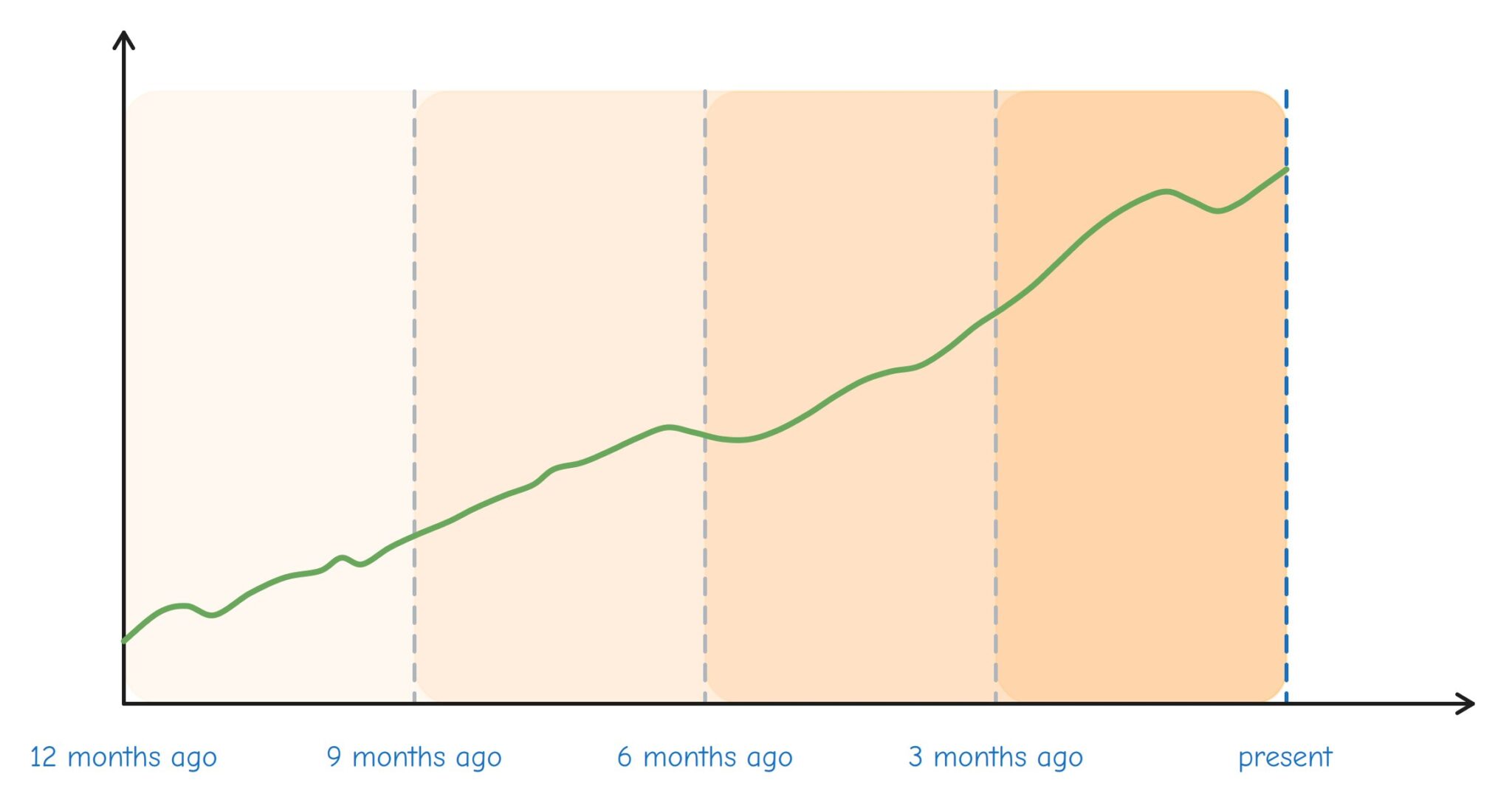
Momentum strategies are more effective with shorter lookback and holding periods. The strategy is supposed to reflect winners, and having a portfolio of stale winners reduces its efficacy. Momentum is a bet on a trend persisting, and what a stock did last month says more about that than what it did nine months ago. However, believing in recency is one thing. Deciding how much of it you want is another, and that second decision is a choice that was implicitly made while constructing our factor. The weights given to data in proportion to their recency is a consequence of overlapping windows, not a preference that we’d actively opted for.
Recency-weighted momentum factors work very well in a bull market. We saw great evidence of this through the Covid recovery in 2020-2021, late 2023 and most of 2024.
A sideways market is where the cracks show. Momentum only buys after the fact. It needs performance to have already happened before it will act, and the bet is that whatever has been happening carries on. Weighting recent performance more heavily makes a larger bet, which is exactly what you want when a move is the start of something. In a sideways market however, this doesn’t hold true. This manifests in three ways.
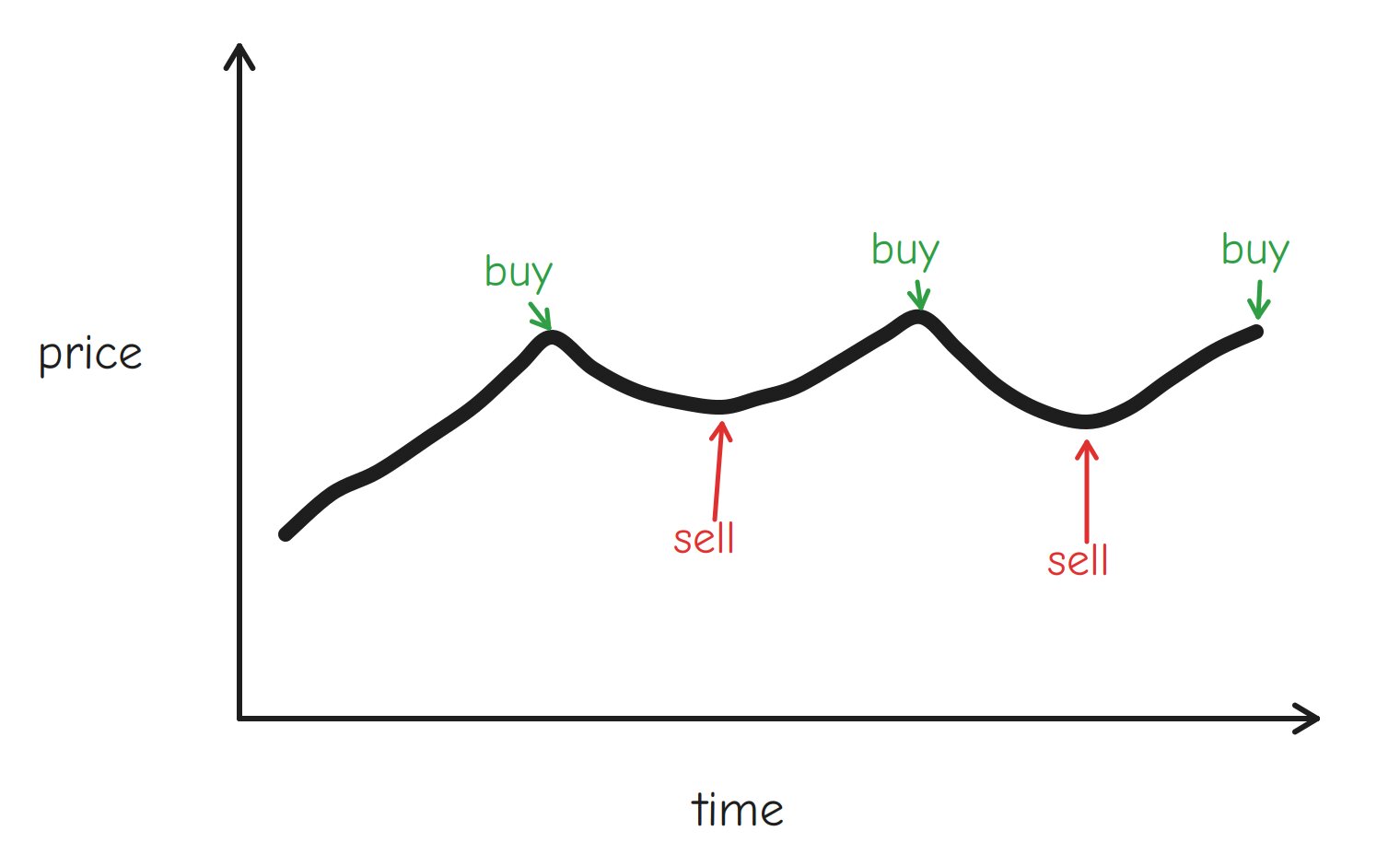
1. First, is what we call the “trend non-persistence” problem. The strategy picks up the winners of the recent past, as it should, but these “winners” don’t continue winning in sideways markets as they do in uptrending markets. These non-persistent winners get dropped at the next rebalance and turn up again a few weeks later. Buying back a stock you sold two months ago, only to sell it again, costs you transaction fees without generating alpha.
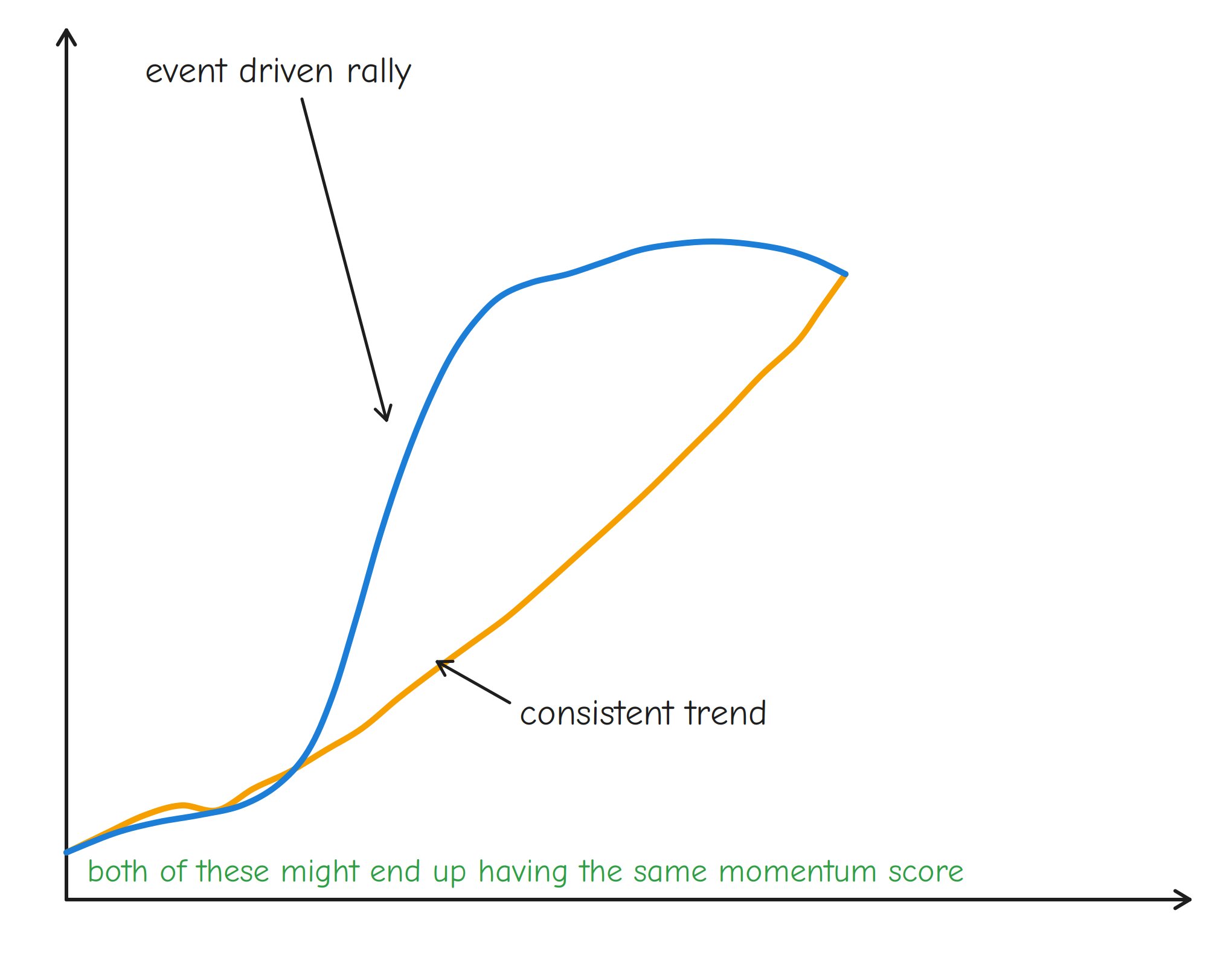
2. Second, “fragile winners”. An event-driven rally that spikes and then stabilises scores the same as a stock that climbed steadily all year. The definition can't tell them apart, and only one of them has a trend left to persist.
3. Lastly, “factor cycles” were in play. Momentum as a style had a poor run from mid 2024 whereas Value did great, which is hardly a secret. But recency-weighted versions of momentum had a materially worse time of it than definitions that leaned more on older data. A version that gave more weight to older data earned ~2% between September 2024 and May 2026. Over exactly the same stretch, the recency-weighted version lost ~8%.
None of these are evidence against momentum not working as much as momentum being itself.
Redefining The Momentum Factor
We went back to our hypothesis and ensured we were deliberate with our choices.
1. First the weighting of days in a stock's history. We still think recency-weighted momentum is the strongest definition of the momentum factor, but now we deliberately decide how much weight every single day in the lookback gets. Recency still gets the benefit. The more recent the day, the more it counts. What's different is that the weight now declines from one day to the next in a way that we’ve defined, rather than in steps that depend on which lookback horizon a day happens to fall in. Judging a cricketer's form works the same way. How he's batted over the last few innings tells you more about the next one than how he batted three months ago. The older matches still matter, they just matter less, and you'd weight them accordingly. The question nobody usually asks is how much less. Each innings gets a weight we've chosen, declining steadily as you go further back, until the oldest day in the window barely counts at all.
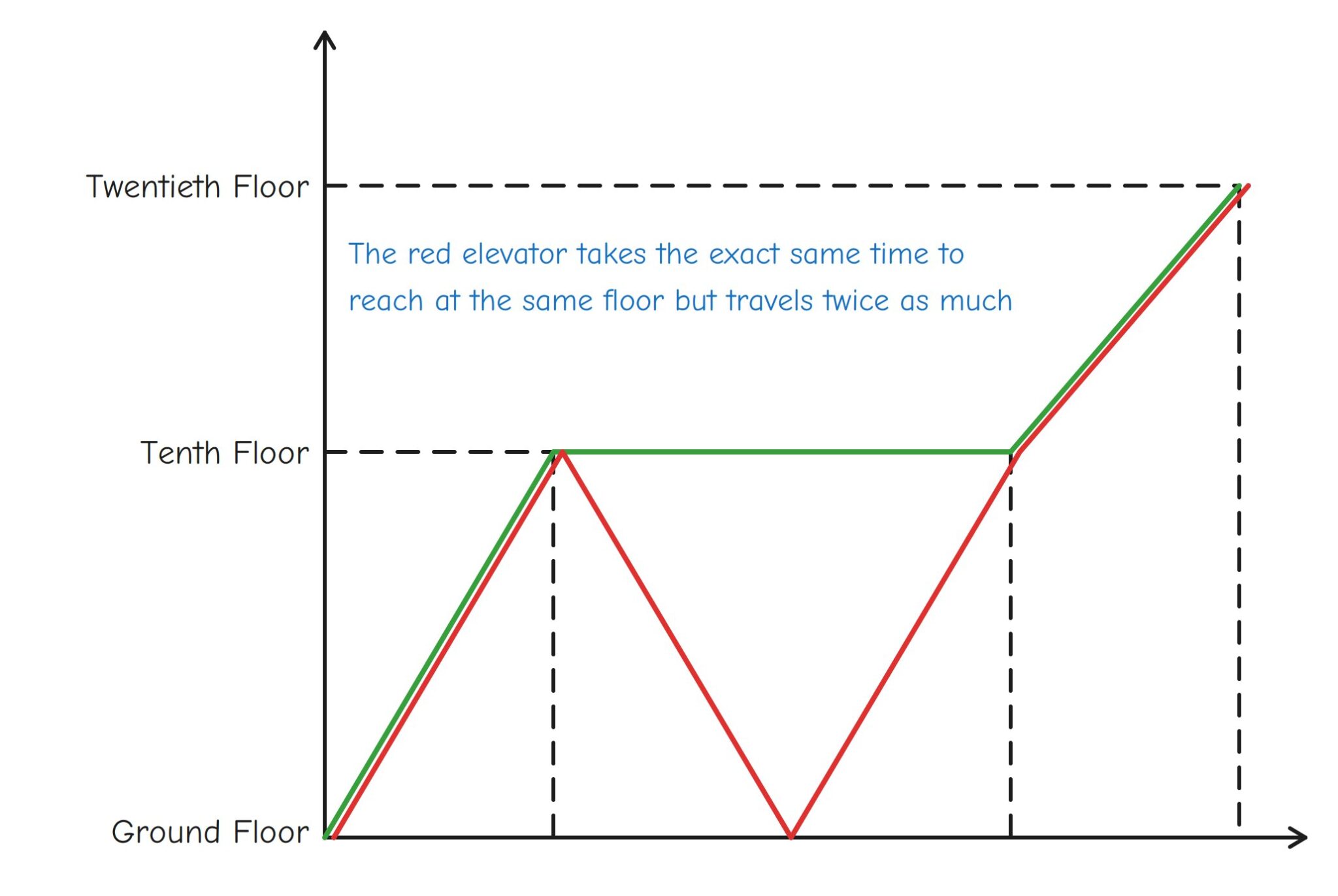
2. Weighting the days is only one half of the equation though. Whether those days actually describe a trend is another question altogether. The question which needs to be answered is whether the journey that led to the destination was worthwhile in its own right. Think of an elevator that only ever moves ten floors at a time. We start on the ground floor and we need to get to the twentieth. One elevator goes to the tenth, then the twentieth, and it's done. The other goes to the tenth, back down to the ground, up to the tenth again, and then to the twentieth. Every single move either one made was exactly ten floors, so neither ride was jerkier than the other, and measuring how dramatic each individual jump was would tell you nothing. What separates them is that one elevator covered ground it then had to cover all over again. It made the same journey twice. Twenty floors of travel against forty for an identical end-result. Given the choice, we'd take the elevator that got there in two moves. The same holds true for stocks as well.
3. The next question is about the extremes. How good were the good days, and how bad were the bad ones? We want to have stocks that bleed the least on their worst days. The good days argument is perhaps less intuitive. We do not want stocks to do great only on their best days. Stocks have to keep doing well beyond just a few good days. Therefore a higher contribution of returns in the best days to the total returns is penalized.
All of the above gets quantified in our model. The trend measures and the recency-weighted score are then combined into a single momentum score, and that's what determines the ranking of the stocks.
What Comes After Stock Selection
Selecting the stocks is half the battle. Weighting of stocks in the portfolio and risk mitigations are the other moving parts.
1. We weight positions in proportion to how stable a stock is. Momentum decides which stock gets in, and the stock’s price stability decides how much weight it gets in the portfolio. This is deliberately done to make a high-risk strategy like momentum less volatile. This is also a different measure from the trend measures we discussed earlier. Going back to the elevator analogy, if there are two elevators that both reach the twentieth floor without doubling back, we'd take the one that moves five floors at a time over the one that moves ten. Same distance travelled, just taken in smaller steps, and a considerably smoother ride.
2. As we wrote earlier, we also struggled with churn. There were stocks which exited the portfolio only to return at the next rebalance, and each round trip cost us. The fix was to introduce a retention threshold. A stock we already own doesn't get sold the moment it drops out of the top slice of the universe based on our rankings. We give it room to slip before we accept that its trend is done. That means we occasionally hold something a little past its prime. But it also means we stop paying twice for stocks that were never really going anywhere.
3. We also have mechanisms for when things go wrong. At a predefined drawdown percentage, we start taking cash calls in proportion to how rough conditions look against how much volatility we're prepared to carry. We take equity off the table in a systematic manner rather than have a binary switch. Occasionally the system determines a full cash call. When a drawdown gets severe enough, we will go fully to cash. The trigger is the strategy's own performance telling us that the markets have stopped favouring the momentum factor for the time being.
None of this is free. Every layer that protects us in a bad market costs us something in a good one, and that's a trade we've made deliberately. However, they help us navigate the question: “what does a momentum strategy do when momentum stops working?”
This is Still Momentum
It would be disingenuous to claim the new Adaptive Momentum strategy is a low-risk, high-return strategy that suits everyone. It isn't. This is still the animal that is “momentum”, and it will still feel like momentum. The good years are the compensation for the bad stretches, and there's no version of this factor where you enjoy the first without sitting through the second.
What we’ve now baked in is designed to make drawdowns shallower and less painful. Not absent.
All of these features we have spoken about above were built into the model one at a time over the past year, each addressing something specific, until what emerged was a completely different strategy from what Adaptive Momentum was 18 months ago. In back-testing, the new strategy holds up considerably better in sideways markets, such as the one from mid 2024 to the end of FY 25-26, than what we were running, and in the last 12 months the impact of these gradual changes started showing up in performance.
The broader lesson has outlived the fix. Every factor we build now gets interrogated the way this one was, on whether each choice was made deliberately or simply inherited.
Adaptive Momentum & Capitalmind Flexi-Cap: What’s the difference
Adaptive Momentum is an investment approach offered by Capitalmind Wealth (our PMS business) while Capitalmind Flexicap is a mutual fund scheme of our mutual fund business. A question we get often is how these two differ given both are quantitatively run. The short answer is:
- Adaptive Momentum is a single-factor strategy purely focussed on Momentum. It is a different version now than what it was 18 months ago, but continues to be a 100% momentum strategy nonetheless. It doesn't dabble in other factors at all.
- The Capitalmind Flexi-Cap scheme adopts a multi-factor approach with a momentum tilt, allocating across other factors like Value, Low Volatility, and Quality depending on what the market is doing.
That difference has consequences. Adaptive Momentum, even with risk mitigations, is momentum through and through, which means it carries both what the factor gives and what it takes. A concentrated single-factor strategy should be expected to run deeper drawdowns than a diversified one. It can also capture more of a momentum cycle when one arrives. Which of those matters more to you is something only you can answer.
So What’s Next
The fully revamped strategy of Adaptive Momentum has been live since May 2026. Five months of performancetells you very little. However, what gives us confidence isn't the last five months. It's that we can name what went wrong for the strategy after mid-2024, explain why and how each change addresses the shortcomings, and show that the revamped strategy held up across the tests we've put it through. On that basis, we are looking to reopen Adaptive Momentum for new subscriptions.
We have a webinar scheduled that will walk you through the changes, and what the live Adaptive Momentum Strategy looks like now. Join us on Sep 26th, 2026 at 11:00 AM. Here is the YouTube link.
Disclaimer
Capitalmind Financial Services Private Limited is a SEBI Registered Portfolio Manager (INP000005847). This post is for informational purposes only. Nothing here constitutes investment advice, a recommendation to buy or sell any security. Past performance of any strategy does not guarantee future returns. Please consult your financial advisor before investing.
Related Posts
 India turns back to a current account surplus in Mar 2024
Deepak Shenoy
 How to think about Asset Allocation in India - Part 1
Anoop Vijaykumar
 Execution as an Asset Class: Why Institutional Order Routing and Timed Rebalancing Matter
Akanksha Maulik
 The opportunity for India in the changing world order
Deepak Shenoy
Make your money work as hard as you do.
Talk to a Capitalmind Client AdvisorInvesting is not one size fits all
Learn more about our distinct investment strategies and how they fit into your portfolio.
Learn more about our portfoliosUnlock your wealth potential
Start your journey today